
By Victor Grimm
For over a decade, the financial world has watched as two distinct ecosystems evolved in parallel: the established, highly regulated corridors of Traditional Finance (TradFi) and the frictionless, permissionless frontier of Decentralized Finance (DeFi). The divide seemed absolute. But today, we are witnessing the construction of a permanent bridge between these two worlds. The architecture of that bridge? The tokenization of Real World Assets (RWAs).
What is RWA Tokenization?
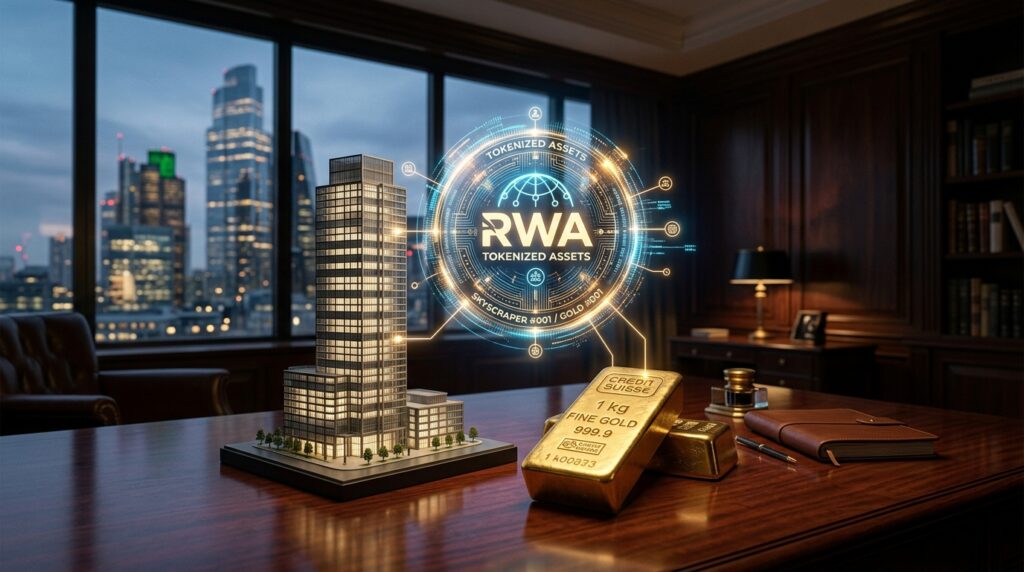
At its core, tokenization is the process of issuing a digital representation of a physical or traditional financial asset on a blockchain. Whether it is commercial real estate in Manhattan, a vault of gold in Zurich, or a portfolio of U.S. Treasury bills, these assets are converted into digital tokens. Each token represents proportional ownership, bringing the tangibility of physical assets into the programmable environment of decentralized networks.
The implications are profound. In traditional markets, transferring ownership of an illiquid asset like real estate or fine art requires intermediaries, weeks of legal maneuvering, and significant capital outlays. Tokenization fractionalizes these assets and enables instantaneous, 24/7 peer-to-peer settlement.
Why Tokenization is Inevitable
From my vantage point working across international financial hubs, the institutional pivot toward RWAs is not speculative; it is purely pragmatic. The primary drivers are liquidity, accessibility, and operational efficiency.
- Unlocking Liquidity in Illiquid Markets: Trillions of dollars are trapped in private equity, real estate, and infrastructure. By fractionalizing these assets, we lower the barrier to entry, allowing retail and smaller institutional investors to participate in markets that were historically gated.
- Operational Efficiency: Traditional asset management is burdened by administrative friction—clearing houses, custodians, and manual audits. Smart contracts automate compliance, dividend distributions, and cap table management, drastically reducing overhead.
- Collateralizing DeFi: DeFi has historically relied on volatile crypto-native collateral. By introducing RWAs, DeFi protocols gain access to stable, yield-bearing assets like government bonds. This stability is crucial for the maturation of decentralized credit markets.
The Current Landscape: Treasuries Lead the Charge
While the tokenization of real estate and commodities holds immense long-term potential, the immediate catalyst has been the tokenization of short-term government debt. In a high-interest-rate environment, the demand for stable, risk-free yield is universal. Protocols are seamlessly wrapping U.S. Treasuries into tokens, allowing crypto-native treasuries and DAOs to earn yield without off-ramping into fiat.
This is the ultimate proof of concept. If we can tokenize the foundation of the global financial system—sovereign debt—the blueprint is set for equities, corporate credit, and beyond.
The Road Ahead: Navigating the Regulatory Labyrinth
Despite the momentum, the path to mainstream adoption is not without friction. The greatest hurdle is not technological, but regulatory. RWAs exist at the intersection of borderless blockchains and strictly bordered jurisdictions. Ensuring compliance with local securities laws, implementing robust KYC/AML frameworks within smart contracts, and establishing legally binding recourse in the event of default are the challenges defining this era.
We are entering a phase of necessary convergence. DeFi must adopt institutional-grade compliance standards to interact with RWAs, while TradFi must upgrade its archaic infrastructure to remain competitive. The ultimate winner will not be one system over the other, but the hybrid infrastructure that seamlessly connects them.
The tokenization of Real World Assets is more than a financial trend; it is the modernization of global ownership. As the infrastructure matures, we will look back at this moment as the tipping point when the blockchain transitioned from a speculative frontier into the foundational layer of global finance.