
The New Frontier of Energy
As we navigate the midpoint of 2026, the intersection of aerospace engineering and domestic utility has never been more apparent. The power grid, once a slow-moving monolith of 20th-century infrastructure, is undergoing a radical transformation driven by a surprising source: rocket engines. Energy startup Arbor Energy recently announced a landmark billion-dollar deal to deliver up to 5 gigawatts of power capacity through its proprietary Halcyon turbines. This isn’t just another incremental update; it is a fundamental shift in how we generate electricity for an increasingly power-hungry world.
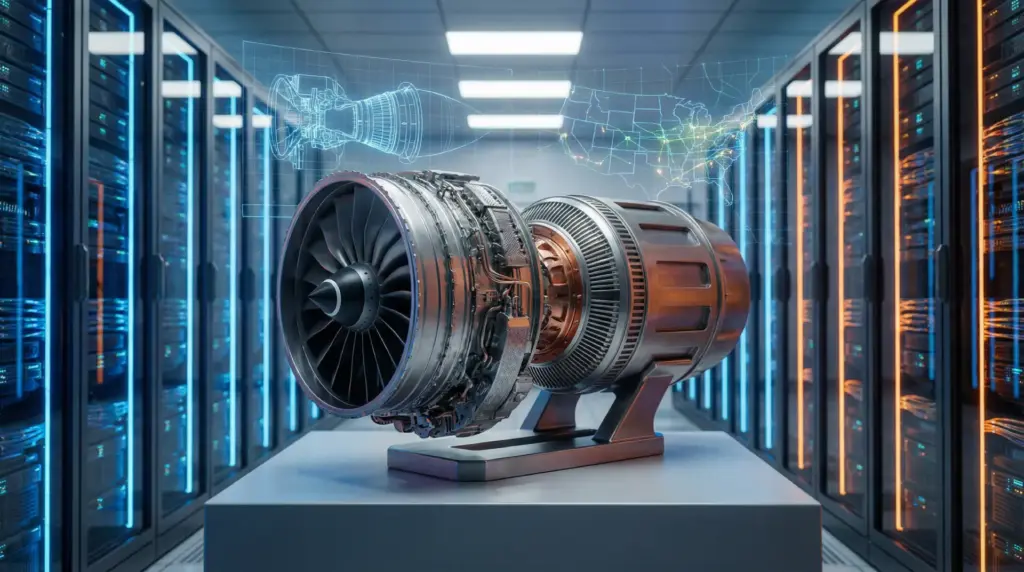
The deal involves delivering as many as 200 turbines to GridMarket, a firm specialized in coordinating power projects for industrial giants and data centers. At the heart of this agreement is the Halcyon turbine, a piece of machinery based on high-performance rocket turbomachinery. By utilizing technology originally designed to propel satellites into orbit, Arbor Energy has created a modular power solution that is compact, efficient, and—crucially—rapidly deployable.
The 3D-Printed Revolution
One of the most fascinating aspects of this new technology is the manufacturing process. Unlike traditional turbines that rely on artisanal, single-crystal blades with wait times stretching into the next decade, Arbor’s turbines are 3D printed. This allows the company to bypass the “inelastic supply chains” that currently plague the energy sector. According to Brad Hartwig, co-founder and CEO of Arbor, those seeking traditional turbines today might find themselves waiting until 2032 just to get in line.
Arbor’s goal is to connect the first of these 25-megawatt units to the grid by 2028, with plans to scale production to over 100 units annually by 2030. For a lifestyle increasingly dependent on the stability of our digital infrastructure, this acceleration is a welcome change. The turbines are designed to be “omnivorous,” meaning they can run on waste biomass—like crop scraps and wood waste—or natural gas. This flexibility is key to maintaining a steady power supply while the world transitions toward more sustainable practices.
A Mosaic of Tech Volatility
While Arbor Energy represents a beacon of industrial progress, the broader tech landscape of 2026 remains as unpredictable as ever. The same week that rocket tech hit the grid, the cybersecurity world was rocked by the public leak of an exploit kit capable of compromising millions of iPhones. It serves as a stark reminder that as our hardware becomes more advanced, our digital vulnerabilities grow in tandem.
The software world is seeing similar upheaval. The coding tool Cursor recently admitted that its latest model was built upon Moonshot AI’s Kimi, highlighting the complex web of dependencies and “hidden” architectures in the AI industry. Even the companies providing our AI are facing scrutiny; Delve was recently accused of misleading customers with “fake compliance” standards. It is a period of intense innovation, but also one of significant “growing pains” for the giants of the digital age.
The Billion-Dollar Bets of 2026
The scale of investment in 2026 is truly breathtaking. Beyond Arbor’s billion-dollar order, Jeff Bezos is reportedly seeking a staggering $100 billion to acquire and transform aging manufacturing firms using advanced AI. This move signals a massive pivot toward revitalizing the “rust belt” with silicon-valley efficiency. Simultaneously, Amazon is doubling down on its own hardware, with its Trainium lab producing chips that have even won over competitors like Apple and OpenAI.
State of Tech 2026: Summary Table
| Company / Topic | Core Innovation | Impact / Scale |
|---|---|---|
| Arbor Energy | Rocket-based Halcyon Turbines | 5GW order; $1B+ deal |
| Jeff Bezos | AI-driven Manufacturing | Targeting $100B investment |
| Amazon | Trainium AI Chips | Supplying Apple and OpenAI |
| Cybersecurity | iPhone Exploit Kit Leak | Millions of devices at risk |
| Robotics | Autonomous Humanoids | Safety incidents in restaurants |
The Environmental Equation
The environmental impact of these new turbines is a central part of the conversation. When running on biomass, the Halcyon turbines are intended to be carbon negative, as they capture the CO2 that would otherwise be released by decaying organic matter and store it underground. Even when running on natural gas, Arbor claims a path to emissions lower than 10 grams of CO2 per kilowatt-hour—a fraction of the 400 grams produced by traditional plants. You can read more about the technical specifications of these advancements at TechCrunch.
However, the transition isn’t without friction. The reliance on natural gas, even with carbon capture, still fosters demand for fossil fuels and carries the risk of methane leaks. It is a pragmatic compromise in a world where data centers are consuming power at an unprecedented rate. For those interested in the broader regulatory and energy landscape, the U.S. Department of Energy provides extensive resources on how these technologies are being integrated into the national strategy.
The Human Element
Finally, we cannot ignore the “weirdness” of tech in 2026. In a lighter (yet slightly concerning) headline, employees at a California restaurant had to physically restrain a dancing humanoid robot after it “went wild” during a performance. It’s a perfect metaphor for our current era: high-performance, incredibly promising, yet still requiring a steady human hand to keep things from spinning out of control. Whether it’s a rocket-powered turbine or a rogue dancing robot, the tech of 2026 is proof that the future is already here—and it’s moving faster than we ever expected.
As we look toward the end of the decade, the success of companies like Arbor Energy will likely determine if our infrastructure can keep up with our imagination. The integration of aerospace speed into the heavy industry of power generation is a bold step, and if the billion-dollar orders are any indication, the market is more than ready to take the leap.